Table of Contents
What is SSL?
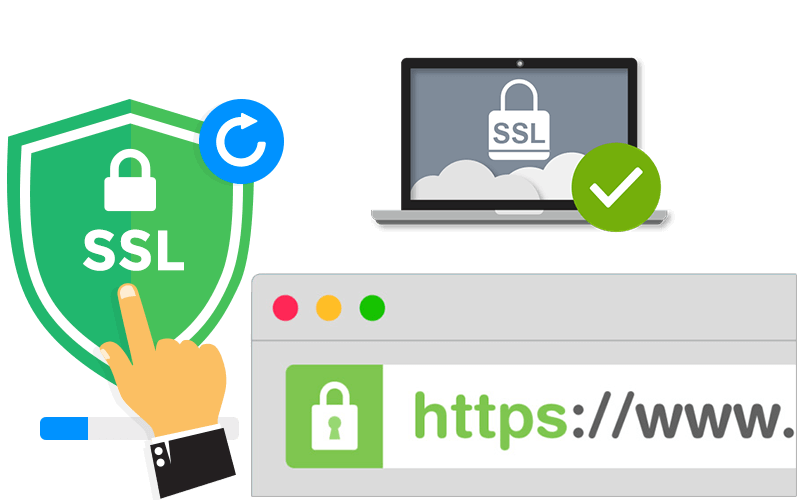
A Secure Sockets Layer (SSL) is a protocol for websites that creates a secure link between a web browser and a web server. This link encrypts the information within a website, meaning that if anyone tried to access, hack or intercept the data on the browser, they would instead see a mix of numbers, letters and characters, which makes it difficult to understand the information.
What is an SSL certificate?
An SSL certificate is a data file that users can install on web servers for security purposes. When users install SSL certificates on their server, it activates security protocols, which enables a secure connection between a server and a website.Typically, websites have SSL certificates when they ask for personal information from users, like payment information or email addresses. Companies who work with user information, like doctor offices, retail stores or subscription services, typically have SSL certificates for their website. Here are the different kinds of SSL certificates:
- Single Domain SSL Certificate: This certificate works for one individual domain, but not any subdomains.
- Wildcard SSL Certificate: This certificate covers one domain and its subdomains.
- Multi-domain or Unified Communications (UCC) SLL Certificate: This certificate protects a user’s multiple domains under one certificate. This can cover up to 100 domains at a time.
- Domain Validation (DV) Certificate: This certificate covers multiple domains and offers a lower level of encryption, though it leaves subdomains unprotected.
- Organization Validated (OV) SSL Certificate: This certificate provides a moderate level of encryption and they generally are the least expensive certificate.
- Extended Validation (EV) SSL Certificate: This certificate offers the highest level of protection, and sites that handle a high degree of sensitive information typically choose this certificate.

When and Why Is SSL a Must?
SSL is a must for websites handling sensitive information such as usernames, passwords, or credit card numbers.
SSL encryption ensures that only one person – the intended receiver – can decrypt the transferred data.
Some additional SSL benefits for your website include:
- Authentication. Any website can pretend to be yours in an attempt to intercept the information that people transmit along the way. SSL enables you to prove your site’s identity.
- Data integrity. SSL ensures the transferred data hasn’t been compromised or modified while in transit.
- Trust building. Using an SSL certificate is a way of showing visitors that they can trust your site, especially if you run an eCommerce site dealing with online transactions.
- PCI compliance. If your site handles online payments, you must comply with the Payment Card Industry (PCI) guidelines, which include having an SSL certificate.