

Table of Contents
Certainly, let’s dive into more detail on each stage of the domain lifecycle, from registration to deletion:
1. Domain Registration:
- Choose a Domain Registrar:
- Select a reputable domain registrar to register your desired domain. Popular registrars include GoDaddy, Namecheap, and others.
- Check Domain Availability:
- Use the registrar’s search tool to verify if the chosen domain name is available. If it is, proceed with the registration process.
- Provide Information:
- Complete the registration form with accurate contact information, including administrative and technical contacts. This information is stored in the domain registry database.
- Payment:
- Pay the registration fee for the chosen duration (usually one year, but you can opt for multiple years). The domain is now registered in your name.
2. Domain Activation and Use:
- Once the registration is successful and payment is processed, the domain is activated and can be used for various online services, such as hosting a website or setting up email accounts.
3. Renewal:
- Domains have an expiration date, typically after one year. To maintain ownership, you must renew the domain by paying the renewal fee before the expiration date.
4. Expiration:
- If the domain owner fails to renew before the expiration date, the domain enters a “grace period,” usually lasting about 30 days. During this time, the owner can still renew the without incurring additional fees.
5. Redemption Period:
- If the domain is not renewed during the grace period, it enters a “redemption period.” This phase lasts for approximately 30 days and incurs a higher renewal fee, known as the redemption fee. During this period, the period is not active but can be reclaimed by the original owner.
6. Pending Deletion:
- After the redemption period, the domain moves to a “pending deletion” status. It is removed from the zone file, and it’s no longer resolvable on the internet. This phase typically lasts for five days.
7. Deletion:
- Once the pending deletion period expires, the domain is officially deleted from the domain registry. It is now available for anyone to register on a first-come, first-served basis.
Additional Notes:
- The specific duration of each phase can vary among registrars, so it’s essential to be aware of your registrar’s policies.
- Some top-level domains (TLDs) may have different rules regarding expiration, renewal, and redemption periods.
- Domains can also be transferred to another registrar if the owner wishes to manage the domain through a different service provider.
To more about Domains
Certainly! Let’s delve into more aspects related to domains, covering topics such as domain extensions, domain privacy, subdomains, and domain transfers:
1. Domain Extensions (TLDs and gTLDs):
- TLD (Top-Level Domain):
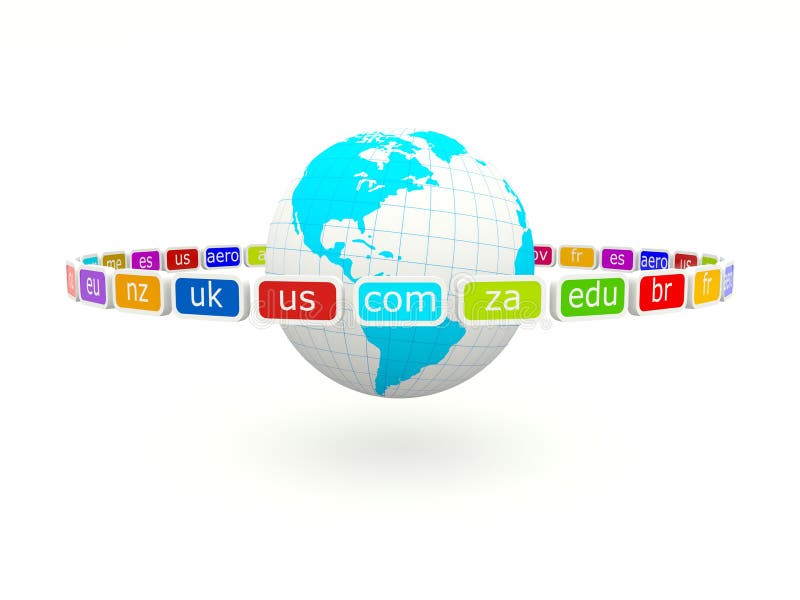
- TLDs are the highest level in the hierarchy. Common examples include .com, .net, .org.
- gTLD :
- A subset of TLDs, gTLDs include a broader range such as .blog, .app, .guru, and more.
2. ccTLDs:
- These are specific to individual countries or territories (e.g., .us for the United States, .uk for the United Kingdom).
3. New gTLDs:
- New gTLDs have been introduced in recent years, offering more options like .tech, .guru, and .blog to provide a more specific online identity.
4. Domain Privacy (WHOIS Privacy):
- Domain registrars often offer a privacy protection service that shields the owner’s personal information from being publicly visible in the WHOIS database.
5. Subdomains:
- Subdomains are extensions of a primary domain. For example, blog.yourdomain.com is a subdomain of yourdomain.com. They allow for the organization of content and services under distinct web addresses.
6. Domain Forwarding:
- Domain forwarding allows a domain to redirect visitors to another website. This is useful when you own multiple domains or have rebranded your website.
7. Domain Parking:
- Domain parking involves registering a domain without associating it with any services. This is often done to reserve a domain for future use or for potential resale.
8. Domain Transfer:
- Domain transfer is the process of moving a domain from one registrar to another. This may involve unlocking the domain, obtaining an authorization code, and completing the transfer process.
9. Domain Expiry Redemption:
- After a domain has been deleted, it might enter an “expiry redemption” period during which it can be restored, usually at a higher cost.
10. Premium Domains:
- Premium domains are often short, memorable, or keyword-rich, and they may be sold at a higher price due to their perceived value.
11. Domain Name System (DNS):
- The DNS translates human-readable domain names into IP addresses, enabling computers to locate and connect with each other on the internet.
12. Domain Authority:
- Domain Authority (DA) is a metric that indicates the authority of a domain in search engine rankings. It considers factors like backlinks, content quality, and website engagement.
13. Expired Domains:
- Expired domains are those whose registration has not been renewed. Some people actively seek expired domains for their backlink profile, domain age, or existing traffic.
14. Domain Reselling:
- Some individuals or businesses engage in domain reselling, buying and selling domains for profit.
15. Domain Management Tools:
- Domain registrars provide management tools, allowing users to control DNS settings, email forwarding, and other domain-related configurations.
Understanding these aspects can help individuals and businesses make informed decisions about domain registration, management, and optimization for online presence and branding.
Conclusion:
Understanding the domain lifecycle is crucial for domain owners to ensure timely renewals and prevent unintentional loss of their online identity. It’s recommended to set up renewal reminders and keep contact information up-to-date with the domain registrar to receive important notifications.

