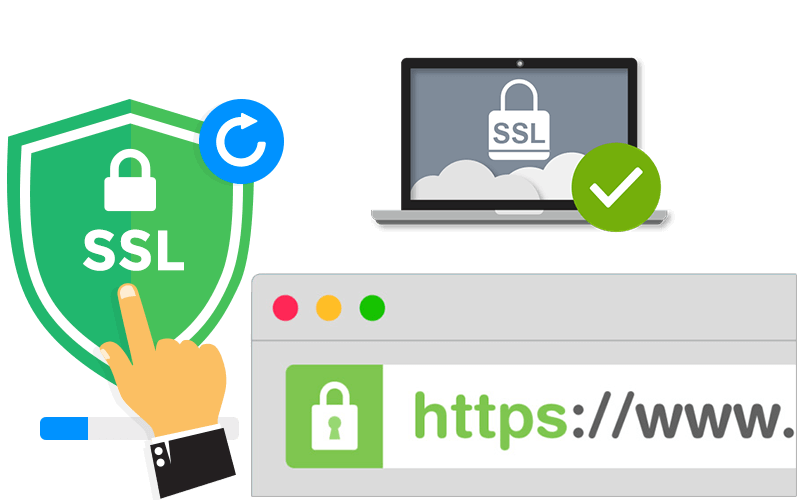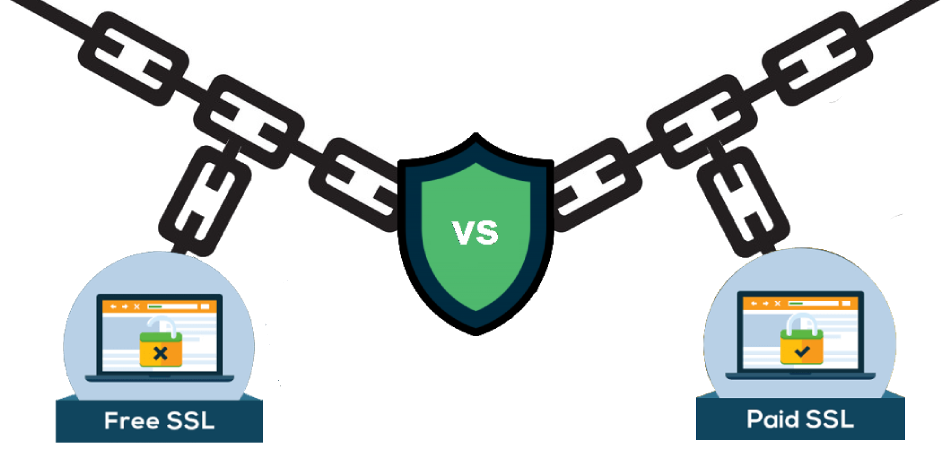
Free SSL vs Paid SSL – SSL (Secure Socket Layer) certificates have become an essential element for all websites these days. They ensure that the traffic exchanged between your web browser and the website is encrypted. Without this data encryption, information is transmitted as plain text that anyone can read, so it is important to add an SSL certificate to your site.
Table of Contents
Both free and paid SSL certificates are available online. To help you decide which SSL certificate is right for your website, we’ve covered everything in this detailed guide.
What is an SSL certificate?
An SSL is a digital certificate that helps authenticate a website and encrypt the information exchanged between a website and its users. You can check if a website has an SSL certificate by going to the address bar.
The web address of a website using SSL certificates starts with “https://” where ‘s’ stands for secure. It also has a padlock icon.
SSL is an encryption technology that protects sensitive information as it moves to and from the website. With an SSL certificate on your website, you can safely share sensitive information, including passwords, banking details, usernames and more.
You can recognize an SSL-secured website easily, as its URL begins with HTTPS rather than HTTP.
Securing a website with an SSL has now become a must-have!
Benefits to having an SSL:
- Builds trust among visitors
- Boosts your SEO rankings
- Improves your brand reputation
- The green padlock shows your website is super-safe
- Data security is a top priority when it comes to e-commerce transactions and even logging into websites. To ensure the safety of this information, no plain text is ever passed – instead, all data is encrypted and kept secure.
- Google has officially said that HTTPS is a ranking factor.
- The green padlock bar helps build trust and credibility for your visitors.
- Avoid the warning in web browsers that mark HTTP pages that collect sensitive information as non-secure.
Why do you need an SSL certificate?
An SSL certificate is an essential component of any website, especially for businesses that want to build trust, ensure security, and improve their search engine rankings. There are three main reasons businesses need an SSL certificate for their websites.
- Provide Security: An SSL provides end-to-end encryption to ensure visitor information is safe on your website. This means that malicious third parties can’t intercept sensitive data like login credentials, credit card numbers, and personal information.
- Build Trust: A website with an SSL certificate has a padlock icon and HTTPS in the URL. Customers are more likely to visit and engage when your site displays signs of security, which can result in increased conversions, sales, and customer loyalty.
- Improve SEO: Search engines, like Google and Bing, give higher priority to secure websites within their ranking algorithms. This can improve your website’s visibility and traffic.
Free SSL Vs Paid SSL: Which One to Go With?
| Parameter | Free SSL | Paid SSL |
| Compatibility with all servers | ✖ | ✓ |
| Validation levels | ✖ | ✓ |
| Green lock in the web address bar | ✓ | ✓ |
| Trust seal | ✖ | ✓ |
| Warranty | ✖ | ✓ |
| Support | ✖ | ✓ |
From the above table, you might have got things more clear. So, does it mean investing in a paid SSL when free ones are available?
A free SSL might not be the right fit for every website. You cannot have the features and functionalities of paid SSL in a free one.
In the end, the answer depends on the type of website you have and to what extent you care about security.
Free vs Paid SSL Certificates: Pros and Cons
Here is the summary of the pros and cons of free SSL vs paid SSL certificates:
Pros of a Free SSL Certificate
- Ideal for businesses with a tight budget as it doesn’t require any financial investment.
- Provides the same level of encryption as paid certificates.
- Installation is simple and some even provide automation.
- Can be a good fit for personal blogs, small businesses, and websites that don’t collect sensitive data.
Cons of a Free SSL Certificate
- Often provide only domain validation to help verify ownership but not the identity of website owner or organization.
- May have shorter lifespan, needing renewal every 90 days.
- Don’t come with warranty.
- May not include trust indicators like seals, green address bar, or business name on certificate.
- Technical support can be minimal, making troubleshooting more challenging.
Pros of a Paid SSL Certificate
- Offers various levels of validation including domain validation (DV), organization validation (OV), and extended validation (EV).
- Includes warranty that covers financial loss in the event of security breach.
- Has longer validity periods, reducing the need for frequent certificate renewal.
- Offers dedicated customer support, ensuring prompt assistance if any issue arises.
Cons of Paid SSL Certificate
- Can be expensive, depending on the level of validation and features included.
- Setting up the certificate may require time and technical expertise.
Conclusion
Whether you are a small, medium, or large business in banking, e-commerce, government service, or any other sector, the security of your website is an aspect that cannot and should not be compromised at any cost. SSL is one of the most secure and reliable cryptographic tools to safeguard your website against cyberattacks.
So, while a free SSL certificate for a websitesounds tempting, especially if you are a fledgling business, it will not serve the intended purpose of security. A paid SSL certificatelike Entrust can take your website security, brand credibility, and customer trust to the highest level. Treat it as an investment – the returns are worth it.